If you’ve ever applied contour or bronzer and thought, Why does this look so much better on everyone else?…you’re not alone. Contour and bronzer can completely change the way your makeup looks, but especially after 40, placement matters.
As our faces naturally change with age, the makeup techniques we used in our 20s and 30s may not be the most flattering anymore. Applying contour too low can visually pull the face downward. Too much bronzer can make mature skin look muddy or heavy. And piling on more product usually isn’t the answer.
The good news? You don’t need complicated contour maps or layers of makeup to create beautiful definition. As a certified makeup artist, I’m going to show you how to apply contour and bronzer over 40 in a way that adds subtle definition, warmth, and lift while still looking natural.
The goal isn’t to change your face. It’s to enhance the beautiful face you already have.
Contour vs. Bronzer: Know Their Jobs Before You Apply Them
Before we start applying anything, there’s one important thing to understand:
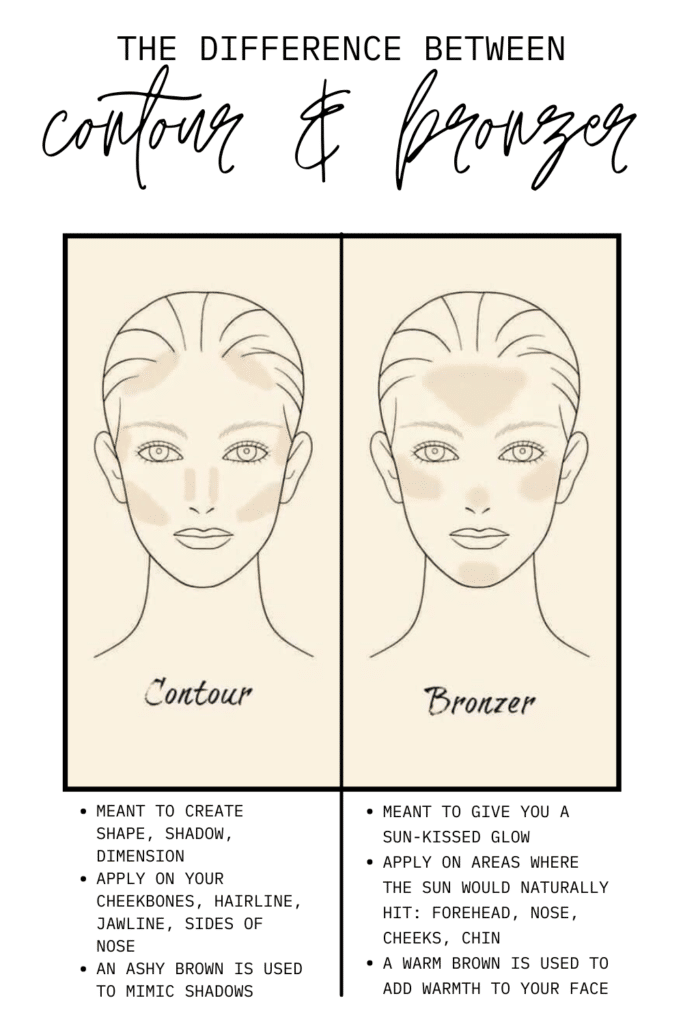
Contour creates shadow. Bronzer creates warmth.
Contour is typically cooler or more neutral in tone because it’s designed to mimic the natural shadows of your face. We use it to create definition around areas like the cheekbones, jawline, forehead, and nose.
Bronzer is warmer and gives your complexion that healthy, sun-kissed look.
Think:
Contour = shape and definition
Bronzer = warmth and glow
They can look similar in your makeup bag, but they aren’t interchangeable.
If you want a deeper explanation of the differences, read my complete guide: What’s the Difference Between Bronzer and Contour?
For this tutorial, we’re focusing on exactly how to apply them to mature skin for the most flattering result.
Why Contour and Bronzer Placement Changes After 40
One of the biggest makeup changes I recommend after 40 isn’t necessarily changing your products.
It’s changing your placement.
As we age, we naturally lose some volume and firmness in the face. If you apply your contour too far down your cheek or drag your bronzer downward, you can unintentionally emphasize that downward movement.
Instead, think:
Up. Out. Lift.
I like keeping products slightly higher on the face and blending them upward toward the hairline.
It’s a tiny change that can make your entire makeup look feel fresher and more lifted.
And remember: mature skin usually looks best when you can still see skin.
You don’t need a dramatic stripe of contour or a heavy layer of bronzer. Start with a small amount and build only if you need more.
Step 1: Apply Your Foundation or Skin Tint First
Start by evening out your complexion with your favorite foundation or skin tint.
Foundation is great for evening out discoloration, redness, or uneven skin tone, but there’s one little problem:
When you apply one shade across your entire face, you can also cover some of the natural shadows and dimension that make your face look…well, like your face! That’s where contour comes in.
Instead of applying more foundation, we’re going to strategically bring some of that dimension back.
If you’re using cream products, I recommend keeping your foundation or skin tint relatively light so everything layers and blends beautifully.
Step 2: Apply Contour to Create Shape and Lift
Contour should be applied anywhere you want to create the appearance of a natural shadow or additional definition.
For most women, I focus on four areas:
Cheekbones
This is probably the most important contour placement to get right after 40.
Feel for your cheekbone with your fingers.
Start near the hairline and apply your contour along or slightly above the underside of your cheekbone, working toward the outer corner of your eye.
You don’t need to bring it all the way toward your mouth.
Then blend upward, not downward.
That upward blending is important because we’re trying to visually lift the cheek instead of pulling it down.
Forehead
Apply a small amount of contour around the outer edges of your forehead near the hairline.
Blend it into the hairline so there isn’t an obvious brown stripe around your face.
If you have a smaller forehead, you may need very little here…or you can skip this area altogether.
Makeup placement should enhance your face, not follow a one-size-fits-all contour diagram.
Jawline
Apply contour directly along your jawbone to add subtle definition.
Then blend the product downward underneath the jaw, rather than blending it up onto the face.
The goal is to create a soft shadow beneath the jawline…not a visible brown line.
Nose
Nose contour is completely optional.
If you want a little more definition, apply a very small amount along the upper sides of the nose and blend extremely well.
Less is definitely more here.
Step 3: Blend Your Contour Upward
If there’s one technique I want you to remember from this entire guide, it’s this:
Blend your cheek contour UP.
Once you’ve placed your contour, use a brush to soften the edges with small upward motions toward your temple and hairline.
You shouldn’t be able to see where your contour starts and stops.
It should simply look like natural dimension.
This is also why I love cream contour for mature skin. Cream products can melt into the skin beautifully and give you definition without looking overly powdery or heavy.
Start with less product than you think you need.
You can always add more.
Removing the racing stripe afterward? Slightly more challenging.

Step 4: Add Bronzer for Warmth
Once your contour is blended, it’s time to bring warmth back into your complexion.
Remember:
Contour follows shadows.
Bronzer follows the sun.
Apply bronzer where sunlight would naturally hit your face, including:
- The tops of your cheeks
- Around the forehead and temples
- A light touch across the nose
- A small amount on the chin, if desired
I like using a larger, fluffier brush for bronzer because it diffuses the product rather than depositing a concentrated stripe of color.
You want bronzer to look soft and seamless.
Think I spent the afternoon outside rather than I painted myself tan this morning.
Step 5: Blend Contour and Bronzer Together
Now comes the magic.
Contour and bronzer shouldn’t look like two separate stripes of makeup.
Once both are applied, softly blend the edges so the products melt together.
Your contour should create subtle depth underneath the cheekbone while your bronzer brings warmth slightly higher on the face.
Together they give your complexion dimension, warmth, and life without requiring heavy makeup.
This is especially beautiful after 40 because you’re not trying to cover or change your features.
You’re simply enhancing them.
Using a cream contour is a game changer! It goes on really smoothly and blends like a dream! It makes the contouring process super easy! All contour colors are not created equal..there are some that are warm, cool, or neutral browns. Depending on your skin tone will depend what shade will look best on you. You can read the Complete Olive Rose Makeup Guide to see what contour shade will work best for you.


Cream vs. Powder Contour and Bronzer for Mature Skin
Can you use powder products after 40?
Absolutely.
But personally, I often prefer cream contour and bronzer for mature skin.
Cream products tend to blend into the skin rather than sitting on top of it, which can create a softer and more natural finish.
They can also be more forgiving on skin with fine lines, texture, or dryness.
If you love powder, you don’t need to abandon it. Use a light hand, avoid overly dry formulas, and build slowly.
No matter which formula you choose, the most important things are:
Placement + amount + blending.
Those three things will make a bigger difference than having the fanciest contour in your makeup bag.
How to Choose the Right Contour Shade
One of the most common contour mistakes is choosing something too warm.
Remember, we’re trying to mimic a shadow.
Look for a contour shade that is slightly deeper than your natural skin tone with a cool or neutral undertone.
It shouldn’t look orange.
Bronzer, on the other hand, should have more warmth because its job is to mimic that sun-kissed color.
An easy test is to swatch them side by side.
Your contour should look more muted or shadow-like, while your bronzer should look warmer and more golden.
How Much Contour and Bronzer Should You Use After 40?
Less than you probably think.
One of my favorite makeup philosophies for women over 40 is:
Use less product, but put it in the right place.
Start with a very small amount of contour and blend it completely before deciding whether you need more.
Do the same with bronzer.
You can always build another sheer layer.
When too much product is applied at once, mature skin can quickly start looking heavy, textured, or muddy.
We’re going for soft definition, not stage makeup.
5 Contour and Bronzer Mistakes That Can Make Your Face Look Older
1. Applying Your Cheek Contour Too Low
If your contour sits too low beneath the cheekbone, it can visually drag your face downward.
Keep it higher and blend up.
2. Using a Contour Shade That’s Too Warm
Warm brown is wonderful for bronzer but can look muddy when you’re trying to create a natural shadow.
Choose something cooler or more neutral for contour.
3. Using Too Much Product
More contour doesn’t equal more lift.
More bronzer doesn’t equal more glow.
Start small and build.
4. Not Blending Enough
If you can clearly see where your contour begins and ends, keep blending.
Your contour should look like a shadow—not makeup sitting on your face.
5. Using the Same Placement You Used 10 or 20 Years Ago
Your face changes.
Your makeup can change with it.
That doesn’t mean you suddenly need an entirely new makeup routine when you turn 40. It simply means that small adjustments—like placing your contour a little higher—can better complement your features now.
Do You Need Both Contour and Bronzer?
No!
This is something I really want women to understand because beauty routines don’t need to keep getting more complicated.
You can use contour alone.
You can use bronzer alone.
Or you can use both.
If I were choosing only one for my everyday mature-skin makeup routine, I would choose contour because I love the subtle definition and lift it can create.
If my complexion looks a little dull or washed out—especially during the winter—I love adding bronzer for warmth.
And when I want a more complete makeup look?
I’ll use both.
The important thing is knowing why you’re using each product instead of adding another step simply because someone on Instagram told you that you need it.
My Simple Contour and Bronzer Routine Over 40
If all of this feels like a lot of information, here’s the routine in its simplest form:
- Apply a light layer of foundation or skin tint.
- Add contour along the cheekbones, forehead, jawline, and nose if desired.
- Blend your cheek contour upward toward the hairline.
- Add bronzer to the high points where the sun naturally hits.
- Blend everything until you can’t see obvious lines.
That’s it. You don’t need a 15-step contour routine to create a beautifully defined face.
FAQs About Applying Contour and Bronzer
- Should I apply contour or bronzer first? I recommend applying contour first because you’re creating the structure and dimension of the face. Once it’s blended, add bronzer to bring warmth back into the complexion.
- Where should women over 40 apply contour? Focus contour along the cheekbones, jawline, outer forehead, and optionally the sides of the nose. For a more lifted appearance, keep cheek contour slightly higher and blend upward toward your hairline.
- Where should women over 40 apply bronzer? Apply bronzer where the sun naturally hits your face, such as the tops of the cheeks, forehead, temples, and lightly across the nose. Keep the application soft and diffused.
- Is cream or powder contour better for mature skin? Both can work, but I personally love cream contour for mature skin because it can blend seamlessly into the complexion and create a soft, skin-like finish. If your skin is dry or textured, a creamy formula may also feel more forgiving than a heavy powder.
- Can you wear contour without bronzer? Absolutely. Contour and bronzer serve different purposes, so you don’t need to use them together. Contour adds shape and definition, while bronzer adds warmth.
- Can you wear bronzer without contour? Yes. If you simply want your complexion to look warmer and more sun-kissed, bronzer may be all you need.
- Does contour make mature skin look older? Contour itself doesn’t make mature skin look older, but heavy application, harsh lines, overly dark shades, or placement that’s too low can be less flattering. Use a small amount, keep placement slightly higher, and blend thoroughly for a softer look.
- What’s the difference between contour and bronzer? Contour mimics natural shadows to create shape and definition, while bronzer adds warmth and a sun-kissed appearance. For a complete explanation—including shades, placement, and how the two work together…read my guide to What’s the Difference Between Bronzer and Contour?
The Secret to Contour and Bronzer After 40
Learning how to apply contour and bronzer after 40 isn’t about trying to make yourself look younger.
And it definitely isn’t about covering up your face.
It’s about understanding how a few strategic makeup techniques can enhance your features as they are right now.
Keep your placement a little higher.
Use less product.
Blend upward.
And choose formulas that work with your skin instead of fighting against it.
Those tiny changes can create a makeup look that feels softer, fresher, more lifted, and more like you.
Because great makeup after 40 isn’t about chasing the face you had at 25.
It’s about learning how to make the face you have today shine.
And that is something worth celebrating.


Here are other blogposts that you might enjoy:
- Contour for Mature Faces: A Simple Guide
- The Oliveda Products Worth Every Penny — A Licensed Esthetician’s Empty Bottle Review
- Effortless & Elegant Spring for Women Over 40
- How to Apply Cream Blush for Women Over 40 (Using Olive Rose Blush Glow)
- Waterless Beauty Before You Buy: What You Need to Know
- The Ultimate Guide to Olive Rose Lips: Shades, Textures & What Works Best Over 40
- Laser Hair Removal at Home: Does the JOVS Device Actually Work?
About the Author
JoEllen is a licensed aesthetician, certified makeup artist, and certified John Maxwell coach, speaker, and trainer. She works with women helping them look and feel confident. She loves teaching women simple beauty techniques so they can feel empowered to try it at home. Her motto is that when you look and feel good, you do good!

*This post contains affiliate links. If you choose to purchase an item featured in this post, I get a small portion from the sale. Thank you! It does not affect you at all.


